Read papers by playing with them.
Upload a paper or a book. Claude finds the questions worth asking and turns each one into a diagram you can click, drag and pull apart, with the original open beside it.
How it works
Upload
Drop in the PDF of a research paper or a whole book. It stays open beside everything you make from it.
Agents find the questions
Claude reads the whole thing, then a small team of agents each chase one question the text raises but never draws.
Play with diagrams
Every question comes back as a live diagram. Drag, click and change the numbers until the idea makes sense.
The paper drew this. Curio makes it move.
Google's 1998 paper, The Anatomy of a Large-Scale Hypertextual Web Search Engine. Same figure, same equation. One you squint at, one you can play with.
In the paper · The figure
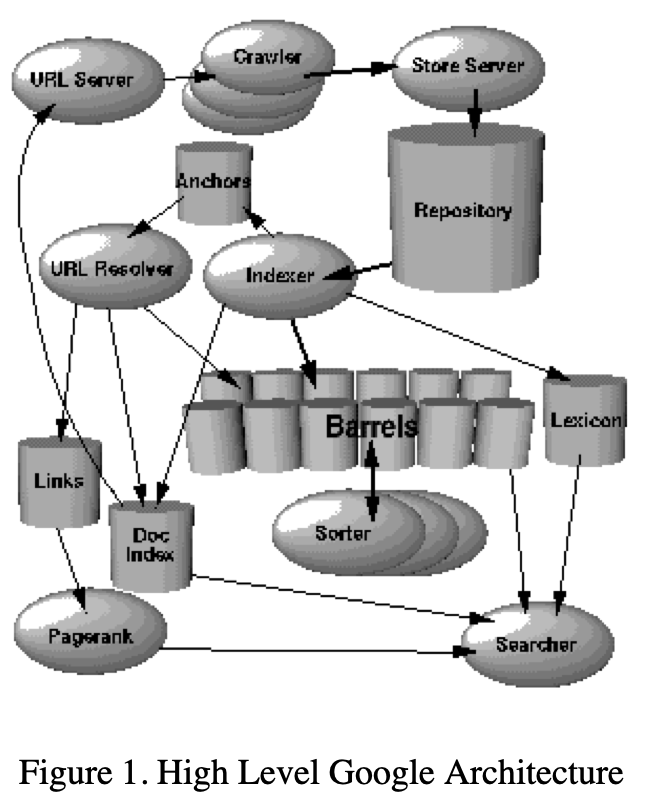
In Curio · The figure
Loading the live diagram…
In the paper · The equation
In Curio · The equation
Loading the live diagram…
What comes back
Here is one question from Attention Is All You Need. Hover the grid, or tab to it and use the arrow keys, to see which word looks at which. The passage it came from stays open beside it.
- Why does attention scale quadratically?
- What does one head actually look at?
- Why divide by the square root of d?
Why does attention scale quadratically?
Every word compares itself with every other word, so 7 words make 7 × 7 = 49 comparisons. Double the words and the grid grows four times.
“sat” looks at “cat” with weight 0.90.